
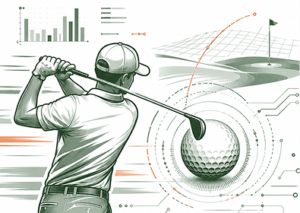
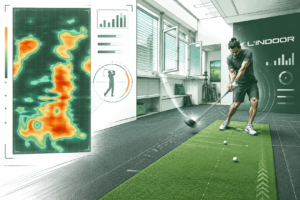
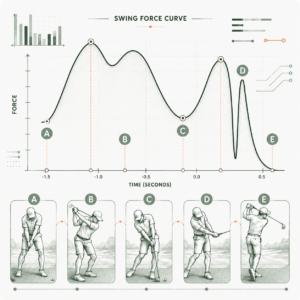
Every golfer transfers force from the ground, through the body, into the arms, through the hands and finally into the club. The hands are not the origin of the forces, but they are the final control interface before the club moves.
Everything that eventually happens to the golf club and finally the golf ball must pass through the hands.
What are your hands really doing during the golf swing?
You may have already realised something surprising:
Although many golfers spend many hours practising their swing, very few can actually describe what their hands are really doing from address to finish.
If you ask the same golfer about the body movements you will often receive a very detailed answer.
A golfer will talk about hip rotation, weight transfer, wrist hinge, release and so on.
But when you ask the much simpler question:
“What exactly are your hands doing during the swing?”
Then the answer will become vague.
Why is this so?
When you are talking, you are moving your hands, right?
Are you doing it consciously? Very rarely, right?
It is almost as our hands have their own script. We are talking and our hands are moving. That’s happening unconsciously.
Why should our hand control, during a golf swing be greater?
It isn’t.
We think that we control our hands, but we do it only partially.
We have a certain feel what our hands are doing, but rarely we are able to describe it precisely and to reproduce it correctly.
The hands are not passive
The hands are the final control interface
Your hands are not just holding the club. It is a misconception that the hands simply connect the golfer to the club.
The misconception is, that you move your body and then somehow automatically the forces are transmitted via the arms to the club.
Just as if the arms were two hooks, which hold the club.
This picture is incomplete.
The hands are continuously interacting with the club. Certainly, arms and hands transmit the forces which you create with your body movements, but the hands play a very active role in what you do during your swing especially during the downswing phase.
All forces which you generate during your body movement are finally sent into the club.
But this is not done homogeneously as one might think. Although the hands are enclosing the club, not all parts of your hand exert the same force or the same pressure on the grip.
You might think, it doesn’t matter – only the total force from both hands, counts.
Yes, this is partly true but not the complete picture.
Dynamic Force Balance
Right hand- left hand balance
The balance between right-hand and left-hand forces is essential for club movement. A professional player can increase the forces of both hands in parallel, without that one hand gets stronger in respect to the other.
A less good player is not able to do that. In this case, if one hand overtakes the other, you start rotating the clubface in addition to the overall club path.
I would like to come back again to the image of the “hold your club as if you hold a bird”. The idea is correct; it prevents the golfer squeezing the club.
But the interpretation is incomplete.
Most people think by the word “holding” on a certain pressure of their hands holding the club. But this is not what is happening during release.
At release you slow down your arms and hands to rotate your club. Your clubhead is accelerating through this rotation. The high speed rotation create the centrifugal force, which tries to pull the club out of your hands.
Therefore, your clubhead speed is determining the total force – this is what you feel in your hands.
The higher the speed of the clubhead gets, the more forces try to pull the club out of your hands.
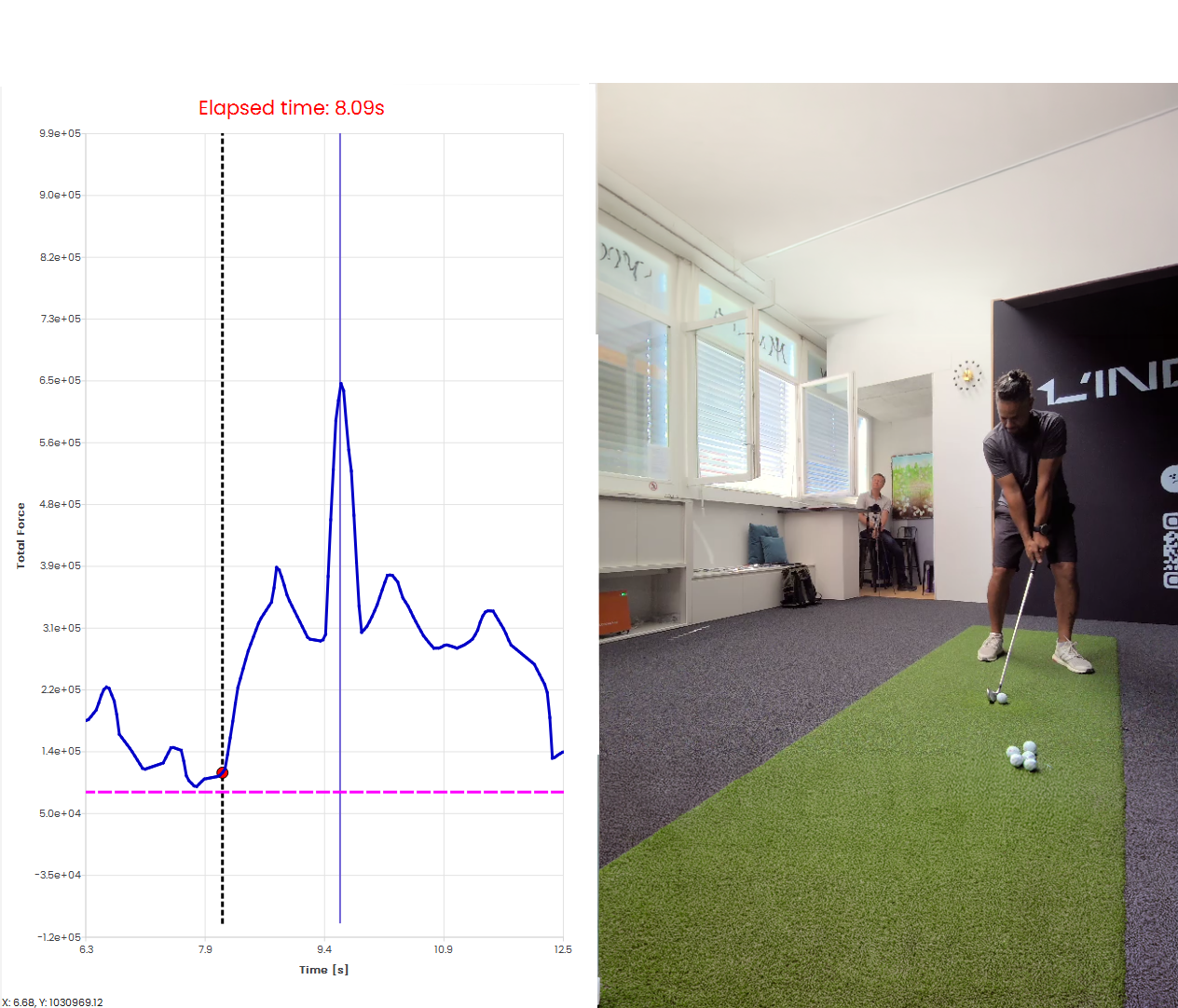
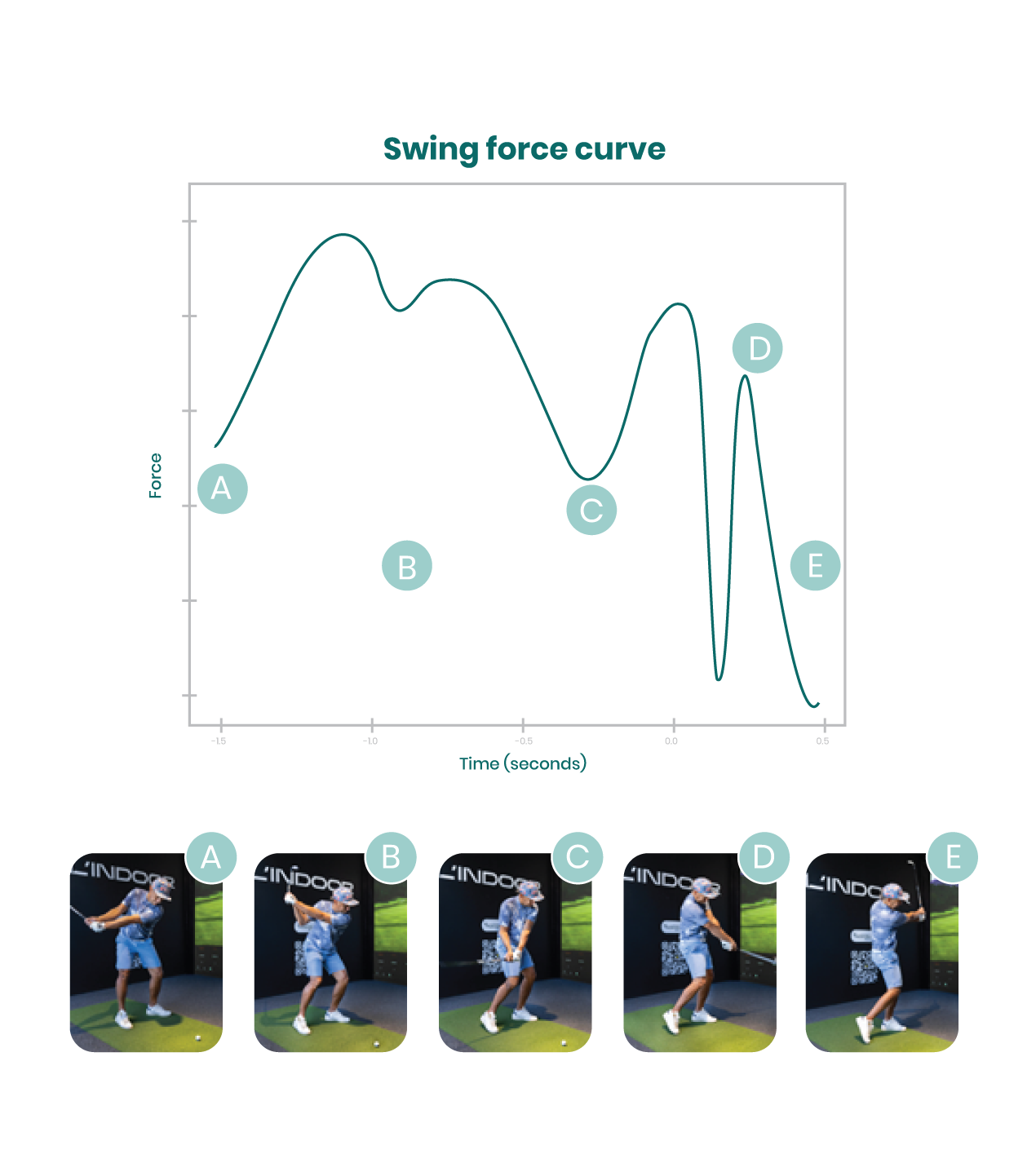
This is exactly what you see in hand force curves. At impact you have steep peak in hand force and just before a valley. The lowest point in this valley is your personal release point.
The golfer does not hold the club tighter at this moment, in the sense that he/she presses more. The golfer just keeps the fingers with a fixed closure position around that club (“the “bird” in this image from before”) , which wants to fly away and therefore, the club grip exerts more force on the hands.
The club pulls – the hands are constant
That’s a slightly different picture: you are not holding stronger; the grip wants to move stronger out of your hands than before.
So, an alternative formulation of the phrase could be “close your fingers just so much as if you hold a bird and then do not close them any further during release”, describes this new point of view.
Lead Hand vs. Trail Hand: Dynamic Force Balance
Every millisecond matters
The time between the start of the downswing and impact may vary between 200 to 500 ms. But when you look closely the most important part is not the total time of the downswing, but the release window.
The release window: we define it as the point when you start opening the wrist angle, so that the club can take over the forces from your arm and start with the rotational acceleration.
In a force curve this is exactly in the valley between backswing and downswing. Here you start with your release (at the lowest point of the valley), but the end of the release – this means your wrist angle is maximum open and you are arm and hand are completely stretched straight out, this is the end of the release. The end of the release only happens a little bit after impact, during the follow through. This is the end of the so called release window.
What Happens to Your Hands During Release?
With this wrist opening you transfer the energy from your moving arms into the club – like when you strike with a whip (or a towel). At release, your arm slows down and the club and clubhead in turn accelerate in rotational movement. The clubhead reaches high velocity and ideally (if you are going for maximum distance) you hit the ball with the maximum velocity of the clubhead.
This happens, when you start with your release at the right time. The width of your release window is very personal. Some golfers have a short, explosive release. Others have a slower release and a wider release window.
Important is that you know your release window. So that you know when to start your release precisely. Only then will you hit the ball with maximum clubhead speed.
Wouldn’t it be interesting to precisely measure release timing, impact timing?
Why Hand Forces Suddenly Change During the Golf Swing
This is the force increase at impact. Highest hand force = highest speed of clubhead.
At this speed you also have the highest centrifugal force which is tearing on your club. Therefore, this is also the highest point in your second force peak in a hand force measurement.
In principle it is easy to understand , but the problem in reality is that this moment of maximum hand pressure and maximum clubhead speed is only a few milliseconds wide.
Precise timing of release start is the most important point.
the science of hand forces in golf
Why is timing so critical?
In other words, if you release starts too early or too late (and this is just a question of a few milliseconds) you will miss this perfect point.
You do not see this start of release with the launch monitor nor with a video analysis alone.
Imagine measuring the force applied by both hands throughout one complete swing including the exact time points of release start and release end.
“hand-force analysis for golf academies and indoor golf centers”
What Are Your Fingers Doing During the Golf Swing?
The fingers are hidden controllers
Some golfers think about their hands.
Very few think about their fingers.
Yet, each finger contributes differently.
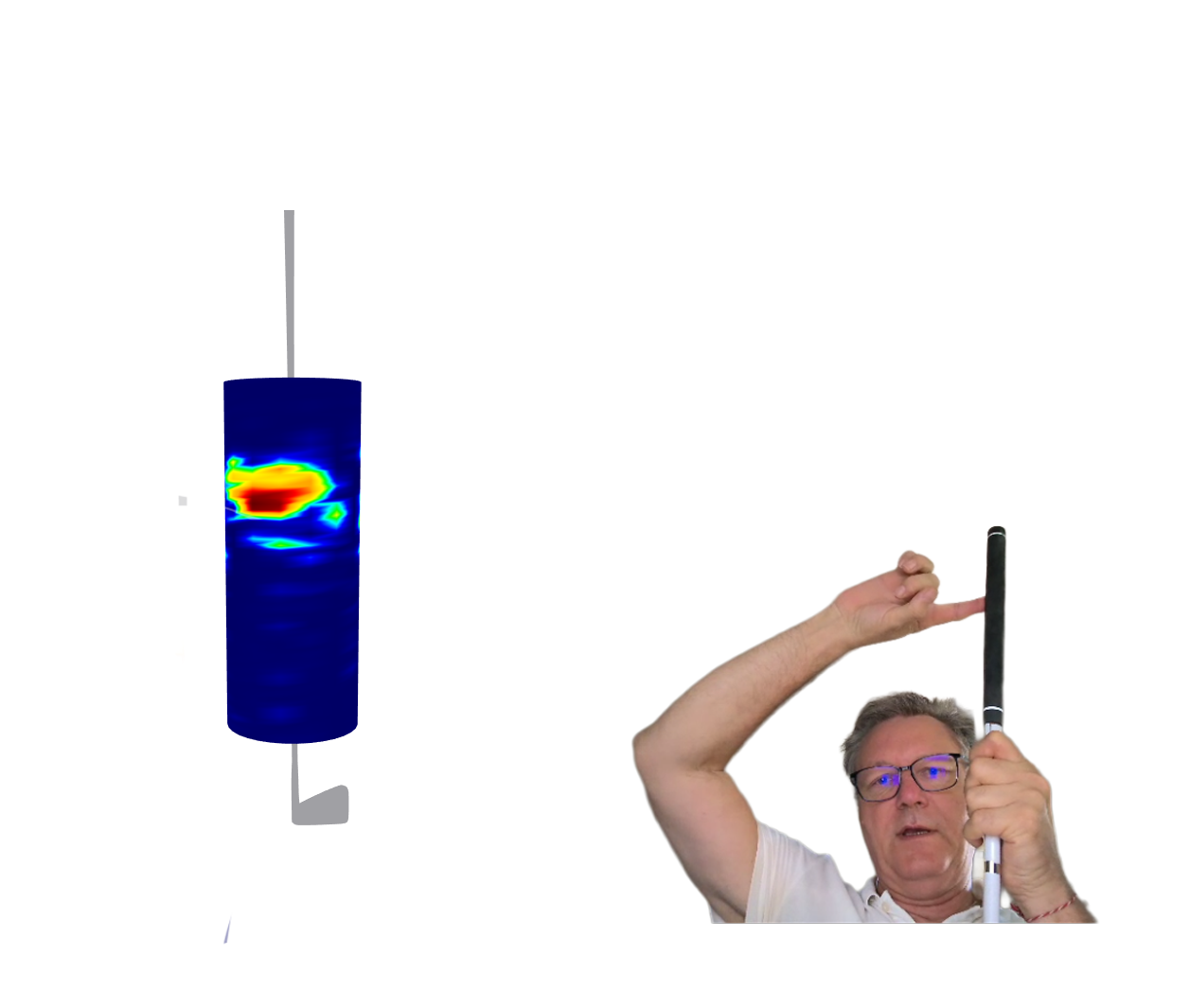
Our fingers have very different capacity to press and exert force on the grip. Obviously, there is already a difference between right-hand and left-hand but even more, every finger of your hand has a different maximum force which can be applied. You think you press our fingers with maximum force, but in reality, it is always the thumb which has the most force.
You hand pressure is not distributed evenly over the club. The fingers are there, with very different pressure contribution per finger and also the hand palm is not pressing homogeneously. Some areas concentrate the force on the grip.
It is clear that when you transfer your body forces into the club, the forces will act via your hands. You transfer most of the forces through those parts of your hands where you can press most.
Consequently, thumbs are extremely important, as they guide the movement.
The golf swing is not controlled by one single force.
Therefore, it is a misconception, to think that grip force can be expressed by one single number ( like “6 out of 10”).
Do Good Golfers Have Repeatable Hand-Force Patterns?
The force curve is never flat
Imagine measuring the force applied by both hands to the grip throughout one complete swing.
Would the graph be a straight line? Certainly not.
The forces will be governed by the physics of the movement, but also they respond to the body movement during the swing.
Every golfer therefore produces a unique force curve.
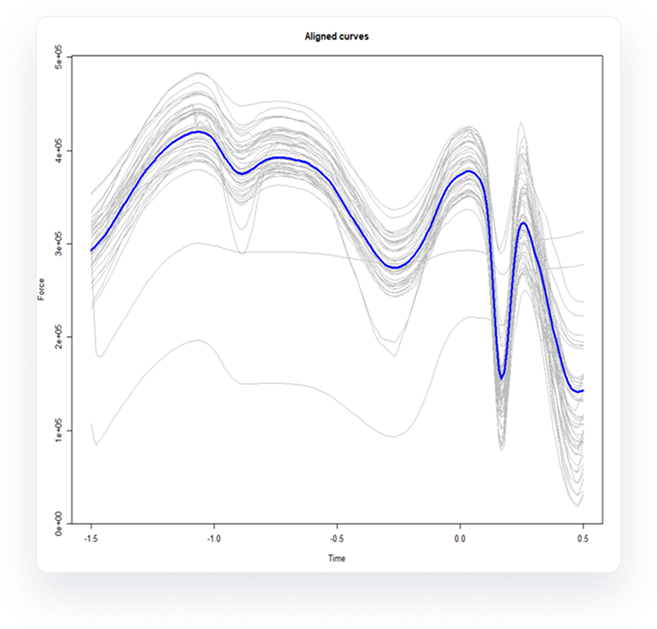
Although no two swings are perfectly identical, most golfers generate remarkably similar patterns over time. This recurring behaviour is what we call a “Swing Signature“.
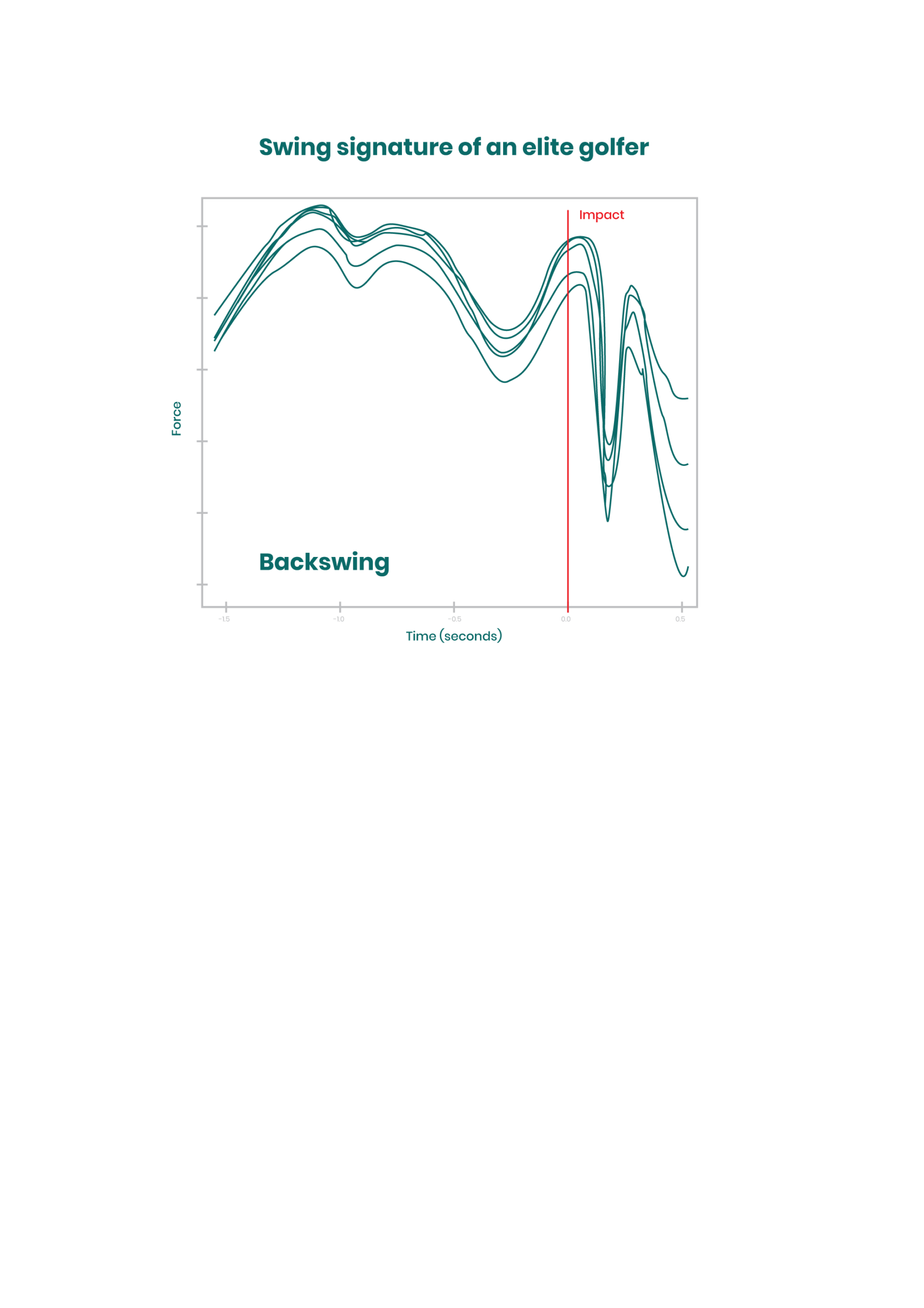
See “Swing signatures” from a professional golfer below. All swings are highly reproducible. The shape is the same, only the height is changing. This translates into different ball flight distance. The higher the impact peak, the further the ball flight.
Swing Signature
Just like a handwritten signature remains recognisably your Swing Signature remains recognizable, even when conditions change.
For example, different clubs, a different level of fatigue, different emotions-all influence your force curve. Nevertheless, the principal pattern still remains visible. Very similar to a handwriting, where a personal touch also remains if when you are using different writing instruments.
Seeing the invisible
Until recently, all of this happened without golfers ever being able to observe it.
Players relied on feel.
Coaches relied on experience.
Launch monitors described the outcome.
Video showed the movement.
But nobody could actually see how the forces between the golfer and the club developed throughout the swing.
For the first time it is becoming possible to visualise this hidden interaction.
Instead of asking
“Did I release too early?”
The golfers begin asking
“What actually happened in my hands?”
This is a very different question!
And once you can answer that question objectively –
You have taken the first step towards understanding why two swings that look almost identical, can produce completely different golf shots.
 English
  日本語
日本語  한국어
한국어  Deutsch
  Deutsch (Schweiz)
  English (UK)
  English (Australia)
  English (Canada)
  Français
  Italiano
  Deutsch (Österreich)
  Français du Canada
  Svenska